


Nvidia- GPU Computing now dominates content creation
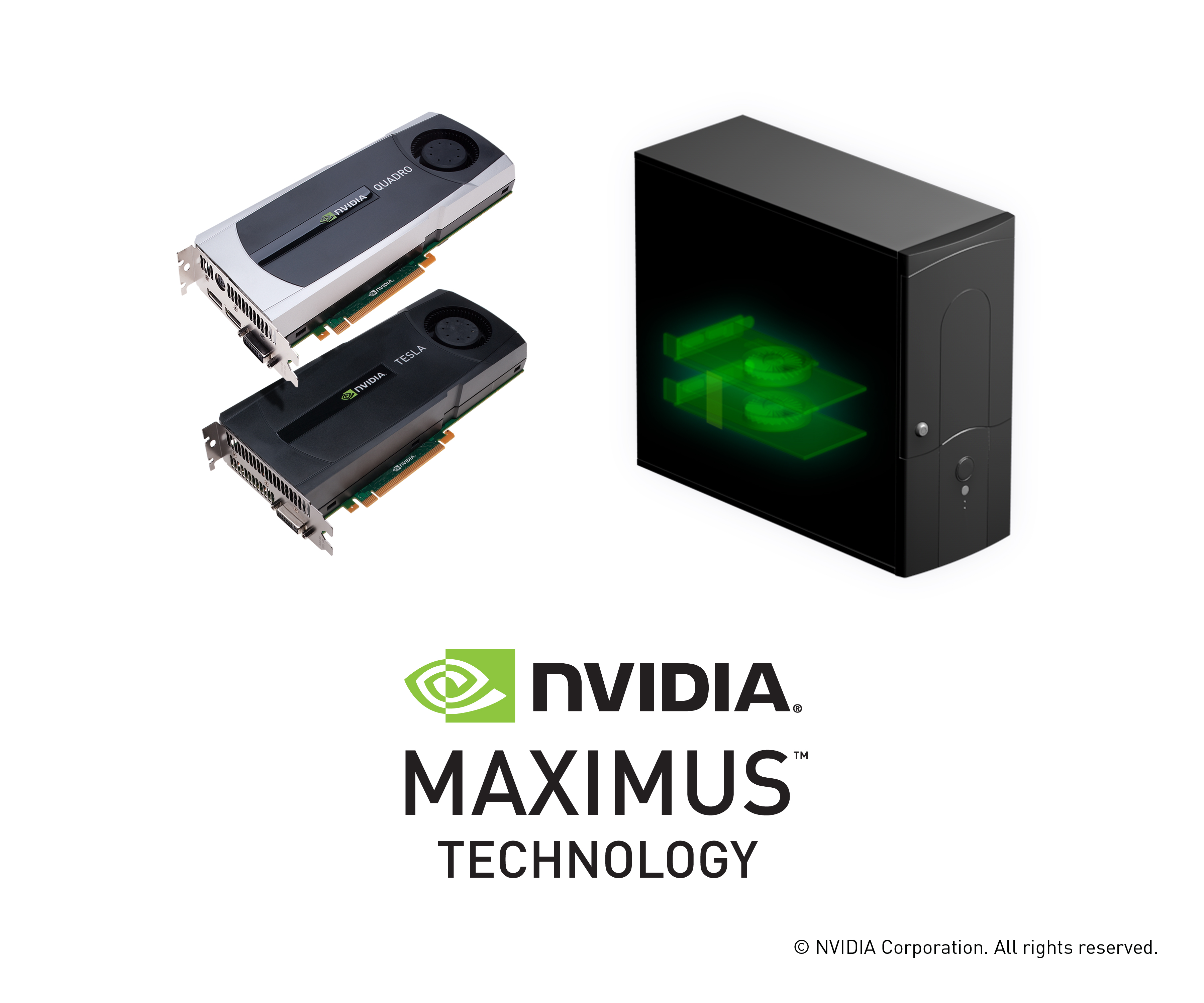
April 2012 – At NAB this year, Nvidia was showing a number of new GPU applications in their booth as well as their Maximus video solution. The Maximus GPU solution is the combination of a Quadro video card and a Tesla CPU computing card in a single system. This combination allows for very high performance graphics management such as ray tracing and rendering to be done in a workstation. This solution is supported by many of the standard editing and effects programs and is natively supported on the new Adobe CS6 suite.
The Maximus solution, allows studios, post-production houses and advertising agencies to create content on a workstation, in very short periods of time, at the same or higher performance levels and shorter runtime than were previously possible only with supercomputers and large offsite render farms. The dual card solution can also be used for real time 3D logo and animations overlays.
Nvidia Quadro + Telsa Maximus Technology Solution
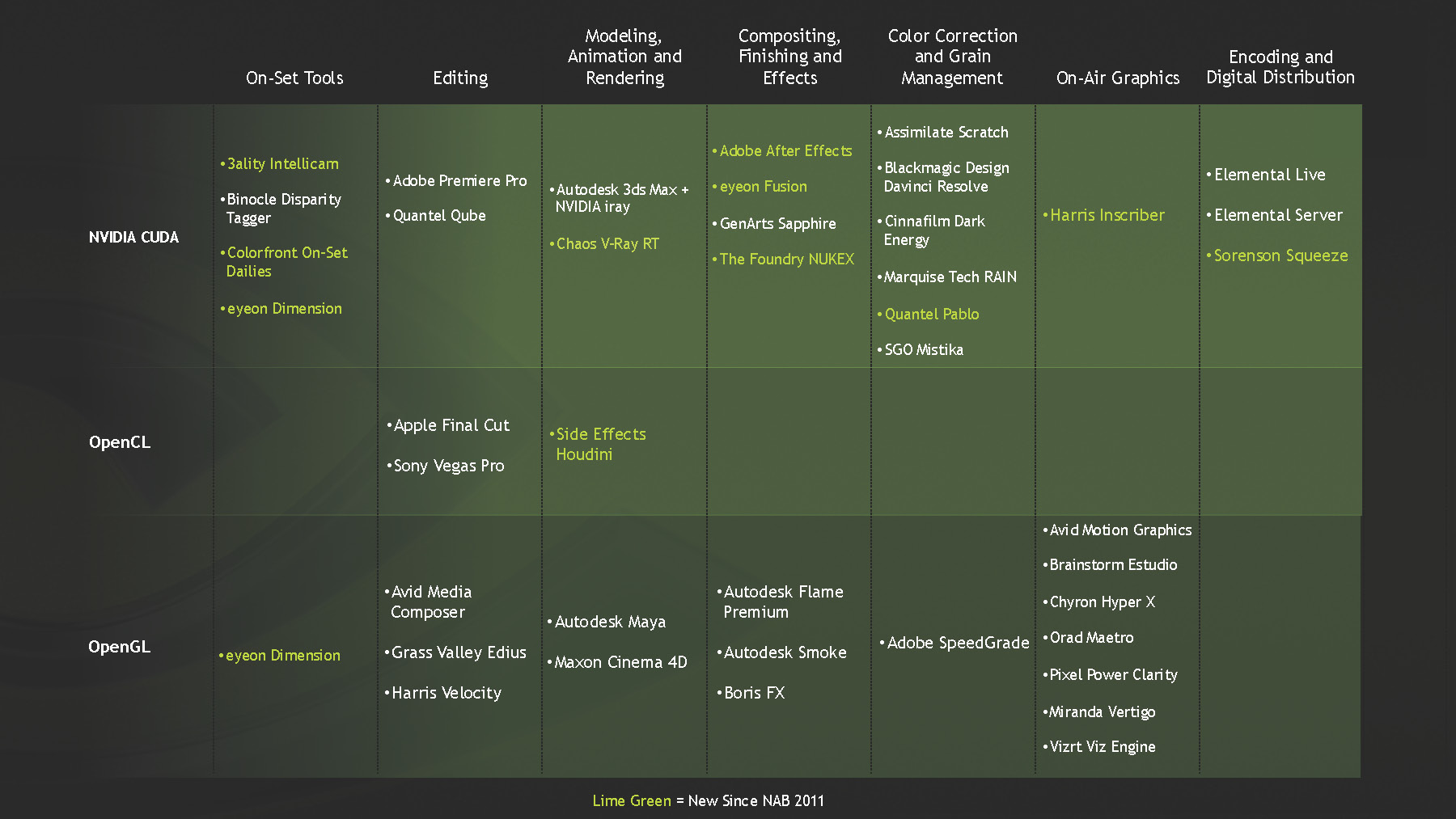
In addition to the Maximus solution, the generalized GPU support is now becomming pervasive in the content creation industry. The GPUs support Nvidia’s native CUDA language, as well as OpenGL and OpenCL programming languages. With this programming support, the GPU engines are in direct broadcast hardware systems, and software for all aspects of content creation- not just animation for backgrounds. A major function is the use in color correction for most of the video editing systems. A list of the current products that support enhanced GPU computing follows.
Nvidia GPU Applications NAB2012
The current generation Nvidia boards support a new memory/bus interface called GPUDirect. The GPUDirect for video technology is driving the adoption of GPUs in film, live broadcast, and video production. The improved low latency of the interface allows video I/O manufacturers who make their own proprietary hardware, along with companies making video switchers are taking advantage of the sub-frame, low latency transfers in their own SDKs and commercial solutions which utilize the GPU. For video editing, the use of GPUs, external to those inside the CPU cores, is becoming the standard. Embedded GPUs in the core processor blocks, are beneficial for completed video playback, but are not large enough and don’t have enough memory to support the compute needs of content creation. For that task, the standalone GPU card(s) still dominate.
