


BYOD and IoT Driving IT changes
January 2013, At the Pepcom Digital Experience at CES 2013, the plethora of new Consumer Electronic (CE) devices will bring a new round of joys and headaches to the IT world, as these devices move and share operation between home and work. Looking from the IT perspective the two major common themes are (1) IPV6 and (2) bandwidth, bandwidth, bandwidth. The new crop of devices is media centric and highly autonomous, which brings storage and security headaches to IT, along with simplicity and high feature capability to the consumer oriented user.
whirlpool connected appliance smartphone app
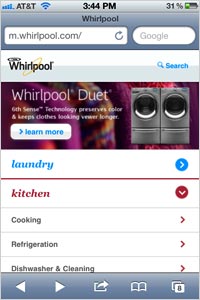
Companies like Whirlpool were on display showing their connected “white goods” & small appliances. These connected devices communicate in an autonomous fashion with services and APIs provided by networking providers such as Arrayent. A key technology to enable the simplified UI and connectivity of the devices is the use of IPV6. This protocol not only allows for more devices to be on the internet as unique points, but also addresses and resolves a great deal of the complexity of directly connecting the device to the internet when they reside behind firewalls, gateways and routers. This use of the nw protocol is one of the main factors behind the ability for smart phones and other mobile devices to directly control your washer, oven, door locks, garage door and lights, and NOT turn on or off those of your neighbor. The matching ability for these mobile devices and phone to connect with IPV6 is why the monitoring for these devices can also be targeted as unique control points on the internet.
The other theme that ran through was “bandwidth, bandwidth, bandwidth”. Historically, computing devices were single point connectivity with wired connections using a 10/100/1000MB NIC. Due to the drive for mobile, these devices moved to supporting multi-band wireless. These multiple bands have been concentrated on celluar radio protocols and 802.11 connectivity. The migration has been rapid on the 802.11 side moving from a to b to g revisions all in a single antenna configuration. The default for entry level products from Toshiba, ASUS, HP, and Lenovo was the next generation of 802.11n connectivity still with a single antenna configuration. The rabid requirements of bandwidth tor the capture transfer and consumption of video has made this a bottle neck. The result has been mid and high end tablets & laptops featuring a MIMO multiple antenna configuration at both 2.4GHz and 5GHz bands, with a supporting Bluetooth side channel sharing the 2.4GHz radio.
To further enhance the experience, especially in laptops and all-in-one configurations featuring the AMD APUs that were on display, the wireless connectivity has moved to the recently ratified 802.11ac protocol with up to a 4 antenna setup. These bring GHz rate wireless to the device on a local LAN, and with the endpoint on IPV6, can be addressed externally at the maximum bandwidth of the device to the externally connected broadband network. These “ac” devices were not limited to the x86 architecture products, but also appeared in the Nivida and Qualcomm Quad core tablet devices that were on display.
While these two solutions to the connectivity and bandwidth consumption problems for the consumer have made their way to market, they bring a challenge to the IT staff supporting them. The BYOD world now has a larger variety of directly connected fast machines that need to be secured as they can do both good and damage very quickly. The rapid release of these products means a larger set of operating systems and applications to have to test, support, and keep out of harms way. They are also stressing the printing needs of many IT groups. In Q4 2012, the business world has finally hit the 50% point for B&W vs Color hardcopy creation for daily business communication. While, everyone talks about a paperless world in business, it has not happened, and probably never will. The shift to color printing for 50% of the documents changes the balance of the network, the resources required to product the documents and the size of storage for all the resulting documents.
At the event, HP was showing their wireless ready printers that support both wired networks and wireless printing from mobile devices, which now makes these printers part of the devices that have to be content secured by IT. While the world is getting faster and cheaper for the end user, the IT folks have a lot of job security, trying to keep the back end running for all these cool new devices.
