


Epson – applications for sensors & smart glasses
January 2014, Epson was showing their integrated system products at CES 2014. One of the areas was focusing on wearables and fitness sensors for pulse, other body measurements. The sensors inside were developed by Epson and incorporate their core technologies in Bio, Swing and Location sensing.
Initial Bio sensing products for North America are in the form of smart watches and fitness bands and are part of the new Pulsense™ product line announced at CES. The technology will also be demonstrated with a “golf swing analyzer” that uses their Swing sensing technology and include their location sensing concept watches also.
Epson BT200-01 Smart Glasses
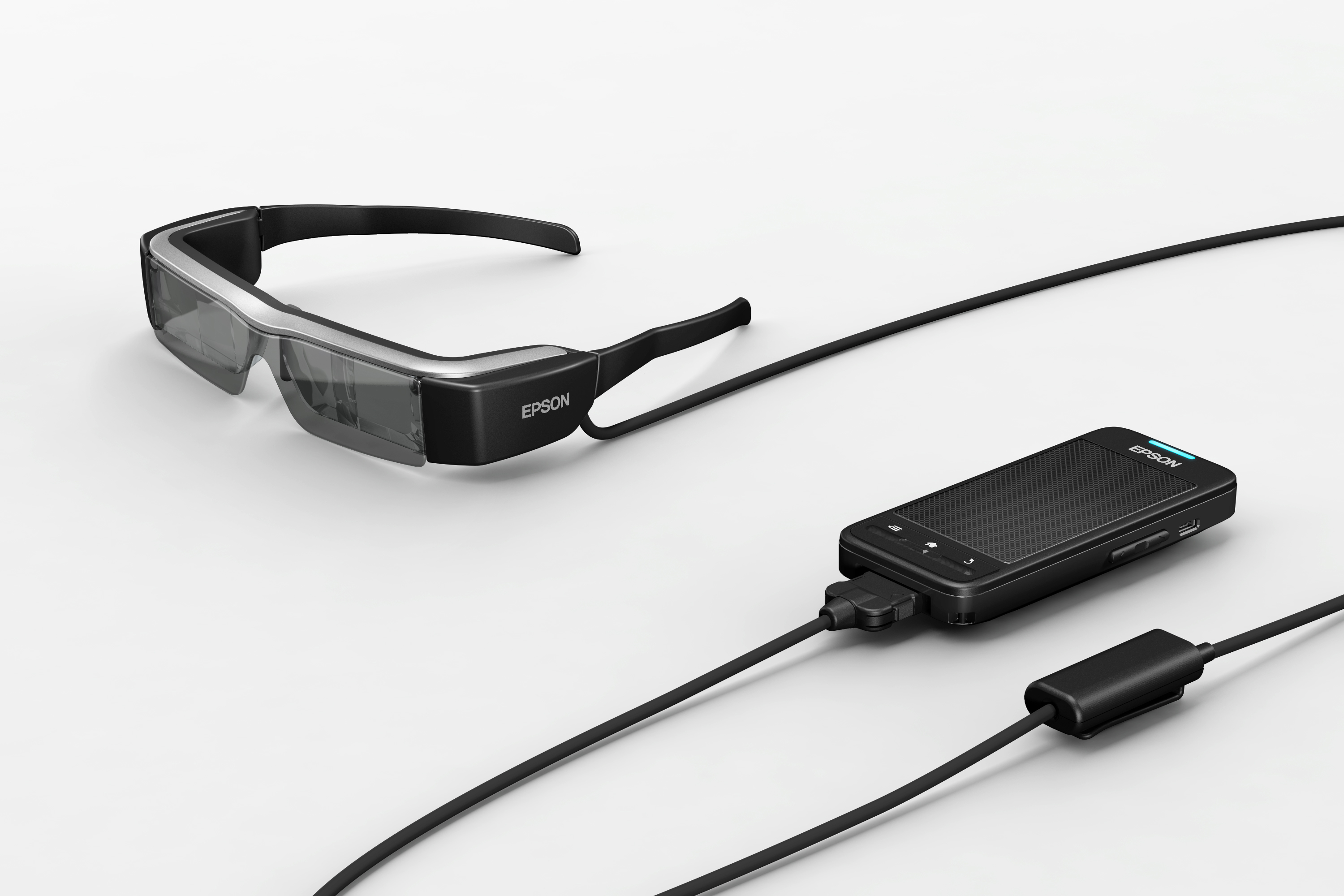
There were multiple displays of the smart glass product – the Moverio BT-200 which is a second generation product. The glasses support high definition displays in a small footprint, with sound and a dual screen view. Designed to be driven by a mobile device, it is much more mobile than prior models.
The glasses were shown with two innovative products in the Epson partner pavilion. One was Scope AR which is an Augmented Reality product that can be used by home installers of stereo equipment. As an initial launch application, the glasses are used to view the back of a home AV receiver. The system will identify the model of the receiver and based on a library of solutions, show how to connect to the device to the many cables needed to wire a modern 7.1 surround sound AV receiver. The solution will be available on a royalty and app use payment model. The glasses are key to display the 3D AR images. The initial AR application is meant to define the API to the development environment for new market areas.
The other application fell into the medical product area. The Evena Medical solution (http://evenamed.com/products/glasses) uses a multi-spectral light source combined with a stereoscopic camera to display high resolution greyshade images of veins for x-ray like vascular images. Unlike ultrasound or static xrays, the glasses enable QHD images, with on-board storage from 1GB to 32GB for procedure documentation and patient history capture. The device also feature see through technology on the glasses, so the vascular view can be switched off to show the true view without removing the glasses from your head so patient care can be uninterrupted. For practical use, the device support Bluetooth, 3G wireless capability, USB2/USB3 expansion and hardcopy, and an embedded barcode scanner. The images are a full 1080p at 30fps, support a 10-12 hour operation per charge. The units have already cleared FDA certification, and are in the process of the production ramp in 2014.
