


USB 3.0 Power and Device Class Specs for Type-C Connectors
September 9, 2014, Intel Developer Forum, San Francisco—The USB promoter group described their efforts on new specification implementations. Now a single cable can deliver high bandwidth and power through a single cable. A new unpolarized connector is smaller than the past type-A connectors and more robust than the mini-connectors currently in phones and mobile devices.
Power delivery V 2.0 and a new billboard device class specifications were released. Details are at www.usb.org/developers/docs The Type-C specifications defines a new connector as well as functional extensions to support other capabilities and alternate modes. These new capabilities are essential for power delivery, to allow all components including the cable to identify power capacities and requirements through alternate modes.
USB 3.1 prototype type c end to end cable and connectors
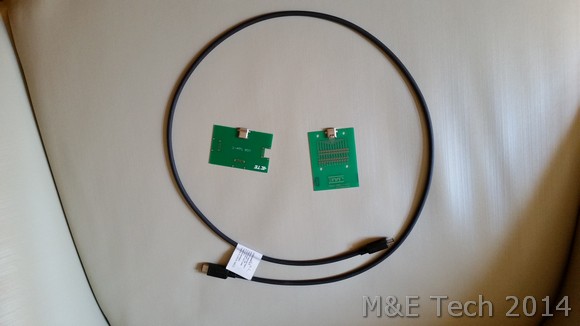
The organization is starting the transition to the new connectors and is working with the various EU agencies to get the new connector approved for the required universal power delivery connector for mobile devices. This single solution for audio-video content and peripherals. Now, USB can be the interface to connect a compute platform to power and low- and high-speed peripherals as well as network connections and storage.
Single USB3 cable driving dual 4K monitors through a hub
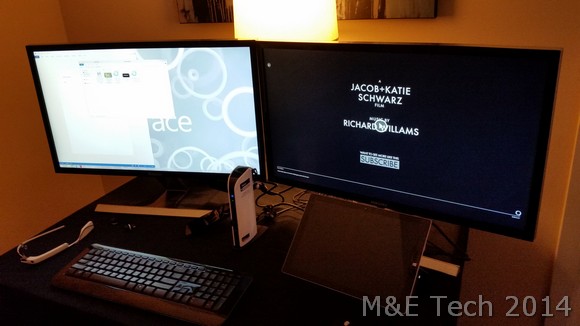
The typical configuration for connections will be to connect everything to a powered hub for connectivity and power. This hub can be in a monitor or as a separate hub device. All of the peripherals can then be connected at a central point for data and power. The 3.1 spec calls for 10Gbps data rates and up to 100W of power per port, within the limits of the power supply. The power delivery can be in either direction and is compatible with existing 2.0 and 3.0 cables.
USB 3.1 type C connectors
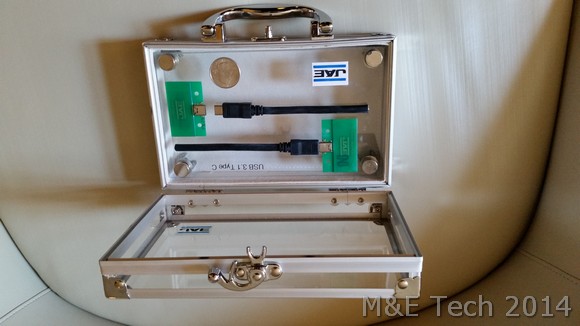
The new connector can be designated for lower power levels to allow for thinner designs and cables. The connectors will be marked for power delivery capacities and will also electronically identify this capacity through the alternate mode protocols. The new form factor for the connector is in response to requests from mobile device makers for a thinner connector with greater robustness than the micro AB connectors. In addition, the new connector can be plugged into the socket in either direction, removing plug orientation problems for users.
The organization is continuing to require standard logos and icons for the connectors and any other USB devices. Branding and specification compliance are very important to the USB IF, and they continue with their efforts to provide a widely understood and used interface for all consumers. Some other standards organizations like Display Port are looking at the type-c connector for their own use, but the cables and connectors will be marked as USB. In addition, the USB protocol is used as the underlying infrastructure for wireless connections. The media agnostic (MA) USB specification was published in March ’14 to provide WiGig, WiFi , and other radio and media types to use the USB transport protocols.
