


Connected and Charged At SAP
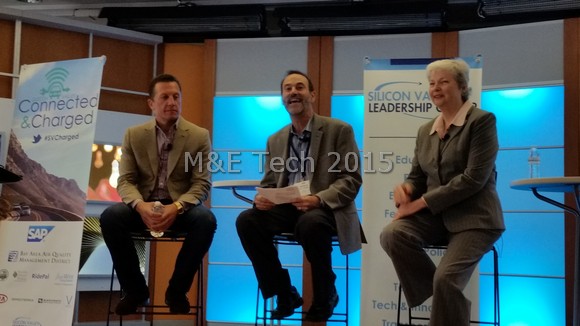
May 2015 – At the SAP executive briefing center in Palo Alto CA, they held a day long discussion and test drives on connected and charged vehicles and the changes/progress ahead. Built around the topic of infrastructure for the next generation vehicles and transportation the event featured multiple tracks discussing technology, business and the social impact of these vehicles.
One of the topics was the progress of the electrification of the highway system in CA allowing the full state to be travelled by electric only vehicles. This electrification is needed due to Gov Browns target of 1.5M EV on the road by 2025 as part of the ZEV std. Nationwide, the marketplace in 2020 is looking at 4%-5% of the vehicles being electric. About 8% of the vehicles will be light duty vehicles and hybrids. A large number of them will use plug-in hybrid technology in order to achieve the 2025 fleet average CAFE Standard of 54mpg. One of the keys to drive these volumes is to keep the government and state incentives in place in order to get people to try the vehicles.
On the business side the issue of the day was connected vehicles. UPS was discussing fleet optimization with their new ORION system. This is a map, tracking and logistics system for route optimization. This allows them to maximum the use of their alternate fuel vehicles. In order to gather the data necessary to develop the ORION program, UPS installed GPS tracking equipment and sensors on its delivery trucks in 2008 using more than 250 million address data points. UPS prototyped the ORION system at over 10 locations during 2008 to 2011. In 2013 the system was deployed to 10,000 routes and 82 facilities and in 2014 expanded to 24,000 routes to be optimized with ORION. The results of the connected vehicle data collection and route optimization was an estimated savings during the prototype period of 2010 to 2012 was 3 million gallons of fuel and 30,000 metric tons of CO2 emissions. With the larger deployment in 2013, the estimated savings from ORION was more than 1.5 million gallons of fuel and 14,000 metric tons of CO2 emissions.
Other aspects of being connected had to do with payment solutions. On the payment protocol and service side was Zip Pay. They were discussing their safe payment through tokenization system that is deployed in conjunction with Verifone. Their new card payment system is made more secure by having cards that do not display a visible card number and name. As a result, lost cards are of little value to people who find or steal the cards. The system is designed to work with a mobile pay system that provides a unique transaction code per use and the verification is with email & a PIN. This smart pay system is being deployed at multiple locations including charging & gas stations, and retail locations.
Parkmobile was discussing both sides of their parking solution – the app for the customer side and the interaction with cities and buildings. Their app not only allows customers to identify available parking in parent cities and buildings, but allows for secure electronic payment for the spaces from a mobile device. The device will also receive notifications of when parking will expire, and in some cases give the option to extend the parking time at the meter.
