


Glasses and cameras at AWE 2015
June 2015 – At the Augmented World Expo (AWE) a couple of companies were showing new and enhanced products that are actually targeting short term needs for the industry that are market ready.
One of these was Epson with the latest version of the Moverio AR glasses and the other newcomer Bubl with 360degree camera.
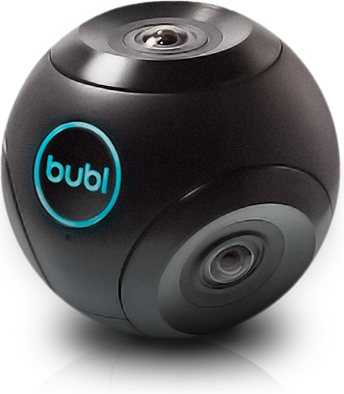
Starting with Bubl – they were at the show doing 1:1 meeting to show off their new 360cam. The device captures 720p30 and 1080p15 video and 14MP stills. The device support microSDHC cards up to 32GB capacity. They are working on their next generation camera that will support the microSDXC card formats which will allow up to the 2TB cards once available. The camera is USB2 chargeable and connects via USB2 to a smart device for the video transfer. The next version of the camera will support USB3 as an interface.
Epson was showing their Moverio AR glasses with new firmware and a new application framework. The application framework allows for dynamic movement such as walking with the glasses and can place high resolution images on the lenses and secondary screen outputs. As a result the glasses have been adopted for use by drone pilots, other automated transportation systems, medical uses, dental uses. The medical and dental uses include overlay of medical imaging data on live patients as they are being treated.
The glasses are connected to 3rd party solutions and additional cameras or sources through an industry standard HDMI connector. This allows live 3D camera feeds and rendered graphics to be displayed from a file based solution or live render. The new framework has a device API in addition to the industry standard connector making it an open development platform.
