


Evonexus panel discusses streaming video by Peter McGuinness
June 2016 – In San Diego, CA the Evonexus Digital Media SIG hosted a distinguished panel of experts comprising David J. Mowrey, VP of Product Management at Clearleap, Steve Adler, CTO of MyTVStudio and Jamie Howard former CEO of Imagine Communications, to discuss the current and emerging technical and business challenges of delivering high quality streaming video. Moderated by Devang Thakkar of DCM Consulting, the panel covered many issues in a wide ranging discussion.
We have already entered the ZettaByte era, according to the panel, driven by video and the desire of consumers to watch a wide range of content on their own schedule, on a variety of devices. This includes programmed content both from storage and live streaming, which has its own challenges, and also user created content from fixed and mobile sources, such as from drones. The user generated sector gained added emphasis with Youtube’s VidCon announcement that it will make it easier for users to stream live from their mobile device add the capabilities already available from apps like Periscope. This trend will only increase with the market adoption of VR.
HLS Evonexus Video Flow
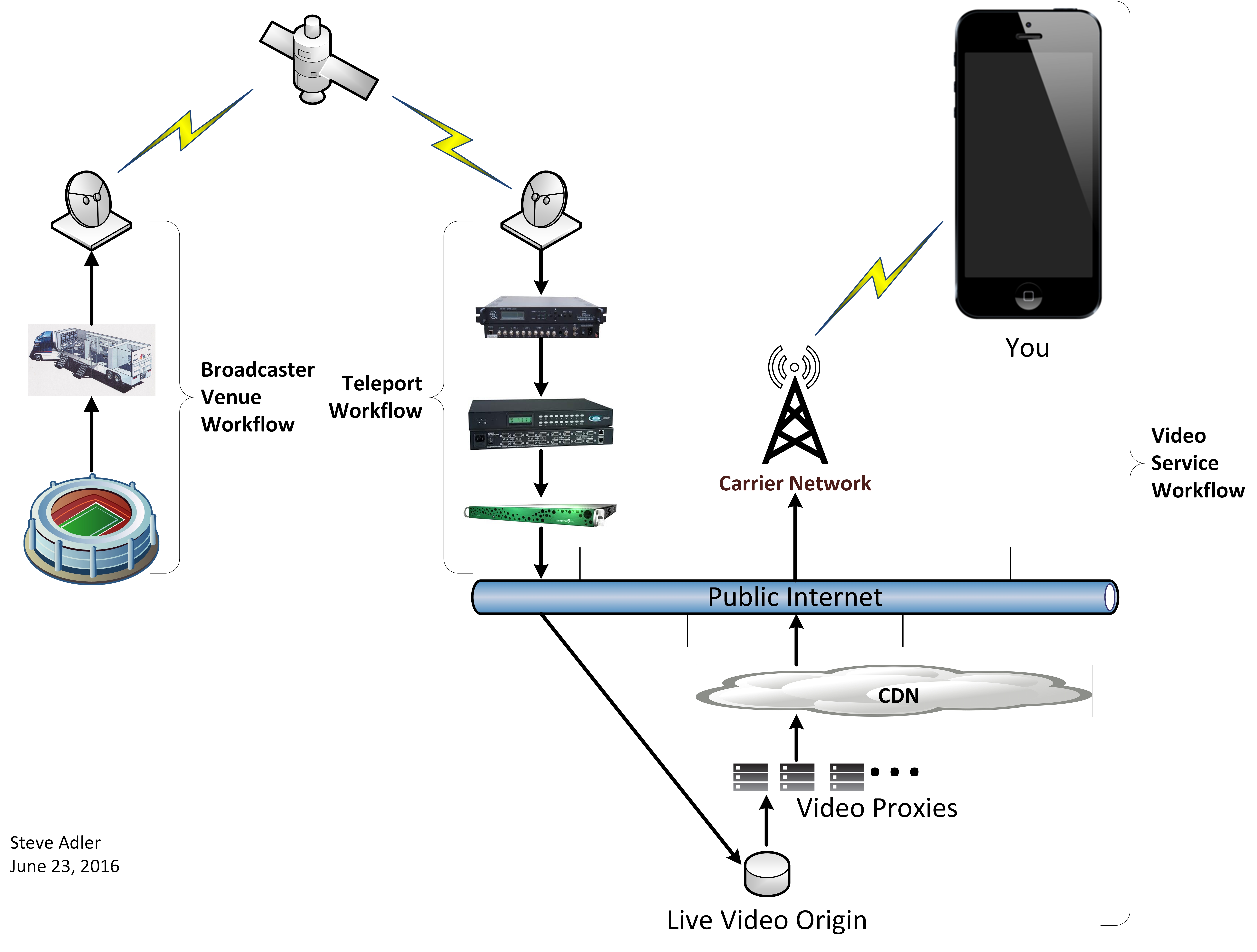
The already large and continuing growth in data traffic stresses the ability of the infrastructure to deliver a reliable, high quality user experience. This QOE will be addressed partly by low level engineering improvements such as decoupling the MAC and PHY to improve virtualization of the network hardware, a technology which is still in development, along with provisioning measures such as pre-positioning content near the edge along with localized multicasting. Load balancing among multiple CDNs was identified as a key approach, with DLVR, it was singled out as an example of a company that is making this capability possible.
All three panelists had collaborated on the project to bring NFL games to live streaming and they shared some of the insights they gained as a result of that pioneering effort. Steve Adler pointed out the sheer complexity of the process: what looks to the user like a simple request actually results in over a dozen transactions, including rights and permissions verification along with metadata and ad insertion. To go along with this, the actual video also takes a circuitous route which can involve multiple up- and downlinks plus various transcodings, all of which result in a significant delay from real time. In the end, they were satisfied with a systemic sub-20 second delay to first frame. The gold standard that ws set was to be on screens ahead of any live twitter commentary.
This complexity can cause reliability problems and if something does go wrong, it can be difficult to find the problem, resulting in extended outages like HBO’s loss of Game of Thrones for 40 minutes during a high-demand episode, so there must be a strong motivation to move to this technology and the panel addressed that in the business related part of the discussion.
Traditional broadcast models suffer from being detached from their customers, relying on second hand data such as ratings and on small data sets such as focus groups; streaming OTT allows the content owners direct access to first hand, detailed data from the largest possible data set. Ownership of the consumer is driving the interest of the established big players as well as the explosion of new subscription VOD services, over 100 worldwide in the last six months. The distribution channel is being usurped by the content providers. While the cable operators are fighting back hard to avoid being reduced to common carrier status for their TV businesses, the trend is inevitable and the panel foresees a period of churn followed by a rapid consolidation around vertically integrated companies which can unify entertainment, social media and user produced video into a coherent platform.
