


Developers challenged for next gen products – IDF 2011
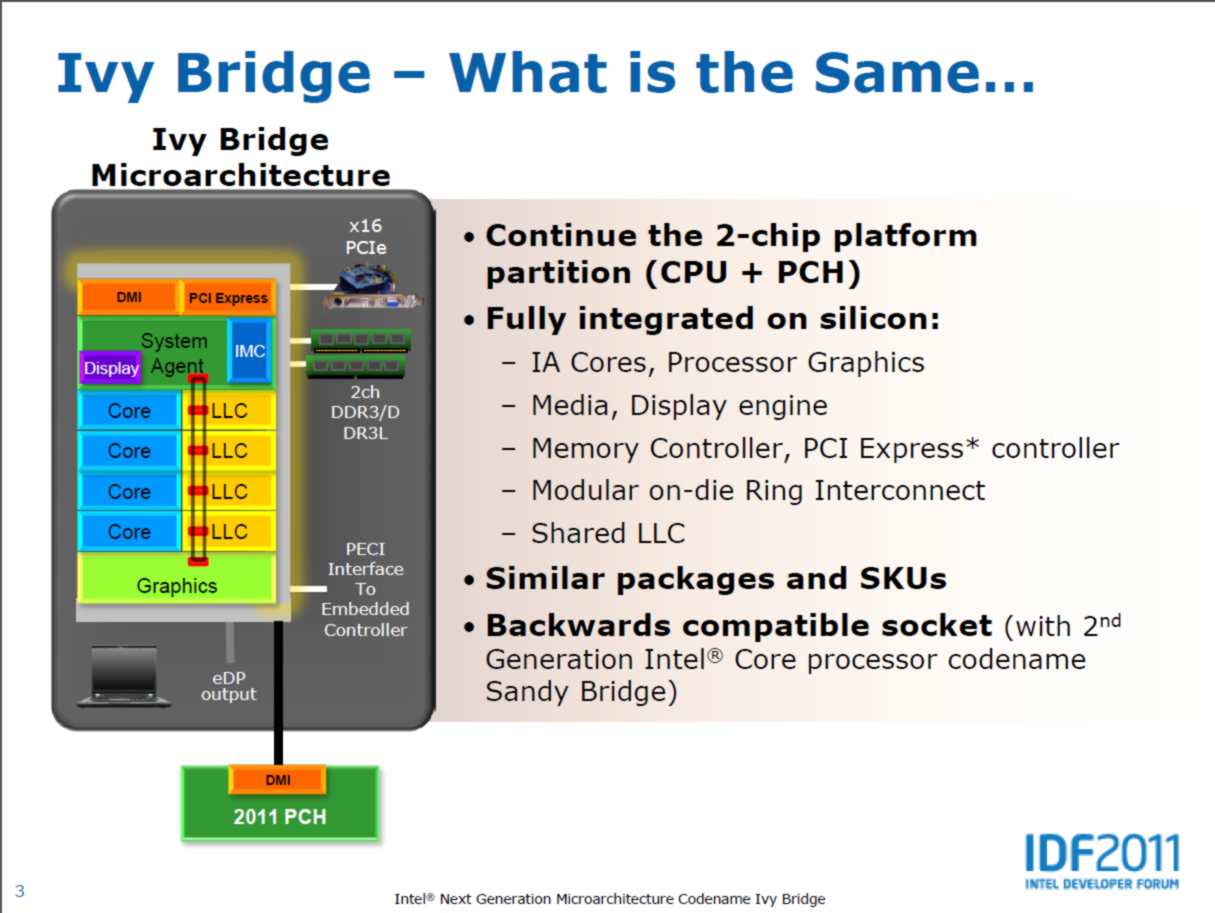
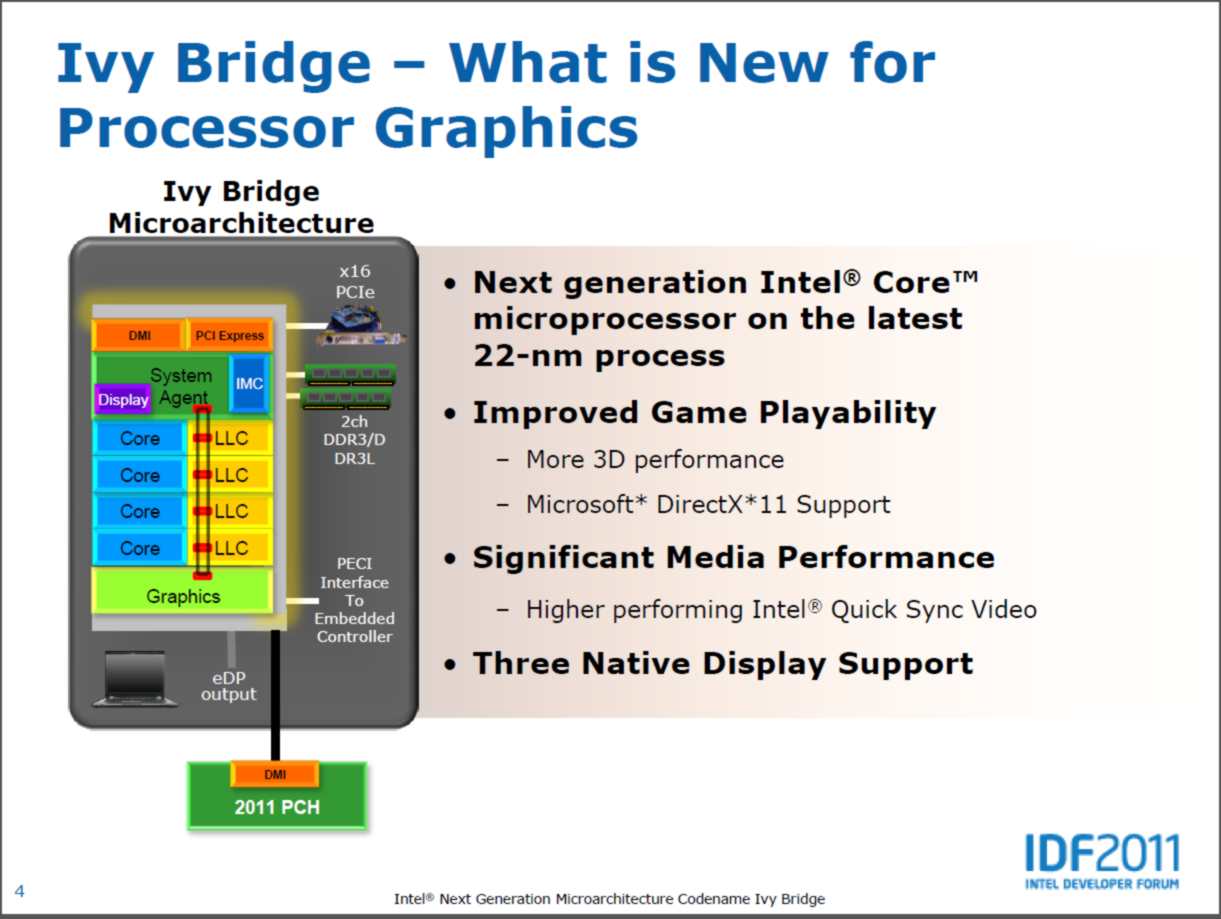
Sept 13, 2011 – San Francisco, CA – The Intel Developer Forum, as usual, brought a number of new technologies to the forefront. This year, more than usual, the technology had a major underlayer of challenges and goals for both the hardware and software community to realize the visions presented. The major announcements included the next generation processor architecture called IvyBridge which is an APU (combined CPU and GPU single chip) product and the Ultrabooks which will allow high performance content creation, not just consumption, in a new form factor that can compare to tablets/netbooks.
The design challenges presented are from the power profile and data sizes in question. The Ivy Bridge architecture combines compute, graphics and network communication into a single chip for the goal of optimizing the power/performance function for tasks. Where tablets are targeted at consuming and playing back content or surfing the web, the Ivy Bridge processor is designed for systems that will allow for creating content (video, still, audio and graphics editing) `and display/play it back at high resolution, including the next generation 4Kx2K displays. (See figures). The power/performance envelope and data processing capabilities are at new levels with this new processor architecture. The challenge to designers is design memory systems and storage that will allow the content to be accessible at the both the high throughput of the processor and the low power use that is allowed.
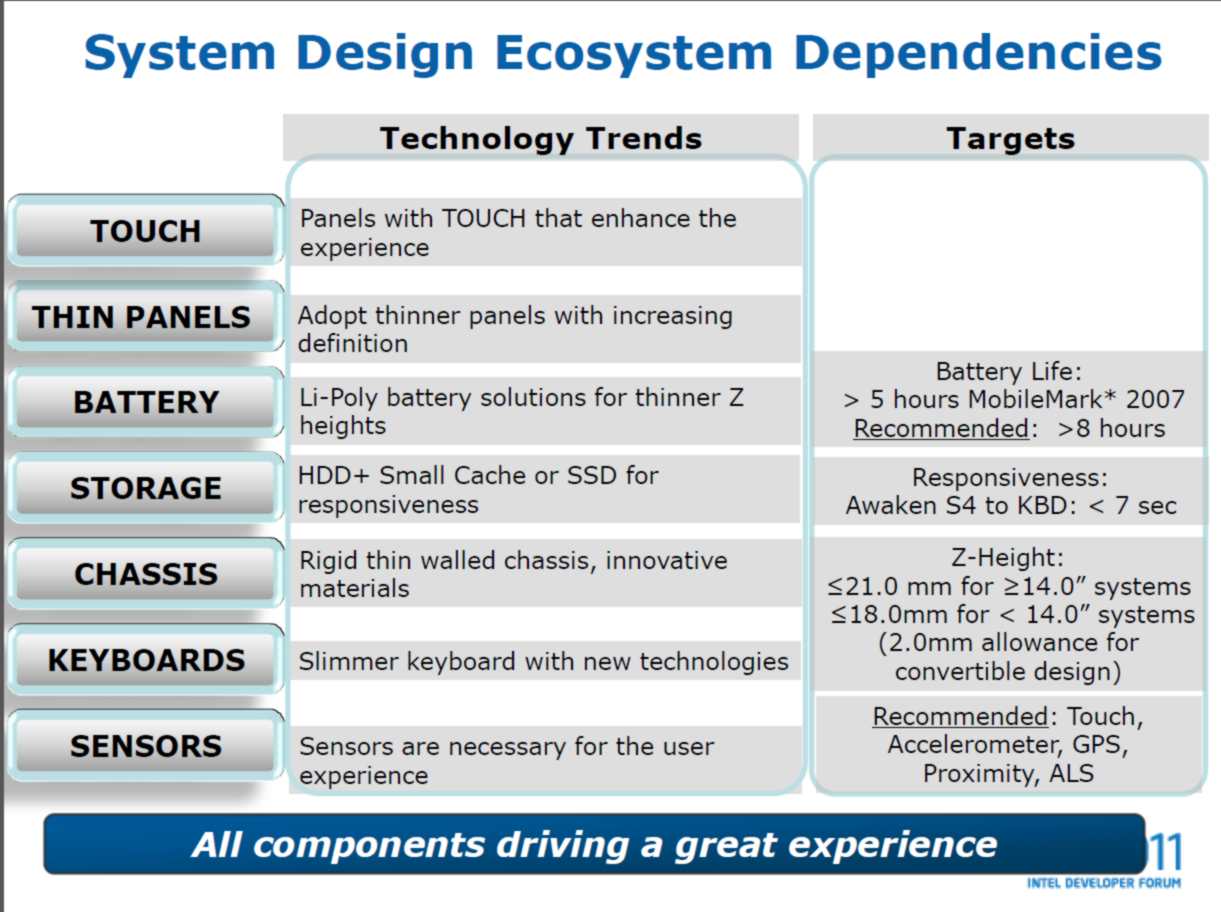
The Ultrabooks are the next generation system solution for these compute platforms. They are defined by high definition screens with touch interface, high bandwidth wireless connectivity, thin keyboards, high efficiency batteries, multiple sensors, cameras and SSD storage. The new guidelines are a full closed design (battery, base, keyboard, and display & camera) under 21mm with a target of below 18mm. These new devices do not have built in optical drives, and feature high resolution video output (HDMI and/or DP), 802.11n and soon 802.11af with multiple antennas, USB3.0 interfaces, 1GbE and in some cases Thunderbolt connections. The key is the battery power for normal – web browsing and cloud applications – to have over 5 hour and target 8 hour battery life.
The challenge in the form factor, as verified by the vendors and models at the show, is the interconnect to the outside world. The high speed interfaces (5Gbps USB3) nominally supplies 900mA on the port and in charging mode provides up to 100W on the line. A targeted 41WHr battery will not be able to provide the 5hr+ playback, after several high speed transfers to and from peripherals, or even watching digital content that is contained in an ODD (DVD or BD) drive. Similarly, the ability to receive a streaming video from a WiFi system – that does not have storage capability (e.g. Netflix) will be hard to watch for a 2 hour experince. The power draw for even 50% duty cycle on the WiFi radio along with the power required for the full graphics playback engine to be engaged is over the battery capapcity.
In this same line, the high speed connections of HDMI, DP, 802.11af, SATA 3.0 and Thunderbolt are all over 5Gbps formats that needs lots of power to address both speed and expended cable lengths. As a result, these peripherals (external displays, external storage, external backup, next gen multi-channel WiFi ) quickly reduce the power function fo reh ultrabooks to being under 1hr.
System design and functional phasing has to be addressed in the application software and data workflow to insure these device can in fact operate on these new devices. The new form factor is sleek, cool to the touch, fast (instant on), quite and easy on the eyes for working. The challenge is in not putting the pieces together into one model, but creating a product that can be actually utlize the capabilities of the device when away from a power cord. The alternative is we are creating a next generation, reduced form factor desktop – as it is still tethered to a wall cord to make it useable.
PC
