


Digital Dragons 2013 European Games Festival
April 19-20, 2013 – Continuing the global expansion of gaming and game development, we visited the Digital Dragons 2013 European Games Festival held in Krakow, Poland. The electronic games market is the fastest growing sector in the entertainment industry and is expected to reach 60 billion euro in 2015 (IDATE prediction). Poland has been getting good reviews and recognition in this industry segment. There are Polish artists and companies that made a big splash in the industry.
As Poland claims its space in the global gaming market, the country had an inspiration and ambition to have its own recognizable event. San Francisco has GDC (Game Developer’s Conference), so why couldn’t Krakow have one as well? That is why, a year ago, the management of Krakow Technology Park with the support from city officials decided to test the waters with a new gaming conference. They invited distinguished guests, developers, and publishers to the town and started the Digital Dragon Festival 2012. The organizers had no doubts that the conference would continue when they received applause from the audience. Tickets were sold out in one hour this year. Digital Dragons 2013, European Games Festival took place in April 19-20 in Krakow, Poland.
Why Krakow? Why Dragons?
Krakow is a dynamic, vibrant, and historical city in Poland seeking the status of Silicon Valley. The city is recognized as the Polish capital of science, culture and technology and is known for its academic character, entrepreneurial spirit, and startup community. The IT and games communities have been growing at a very fast pace in this region. Companies including Artifex Mundi, Bloober Team, Drago Entertainment, Ganymede, Reality Pump, Tate Interactive and Teyon, all have their headquarters there.
Once upon a time, there was an ancient legend about a dragon living in the cave of Wawel nearby Krakow that terrified the city. Each day, Krakowians delivered a live sheep to the front of the cave and once a year had to sacrifice the most beautiful virgin from Krakow. The legend continues, when one brave man, madly in love with the beautiful girl selected to be sacrificed, killed the dragon by giving him a poisoned sheep and saved the virgin and the city. The creature was killed but the legend survived and people of Krakow made the dragon the symbol of the city. It has a monument in the city that bursts with the fire every hour and every gift store in Krakow offers the mascots of the green creature.
Now Digital Dragons are coming to town. One of the missions is to develop cooperative business platforms for all parties of the gaming world. The Digital Dragons event in Krakow is an opportunity to recognize the landscape of the gaming space and to meet people from game production studios, publishers and developers. The program of the DD Games consisted of keynote speeches, panels, workshops and sessions.
panelists from left: Slawomir Idziak, cinematographer; Adam Badowski, managing director at CD Projekt Red; Boguslaw Bialoskorski, PlayMakersTV; moderator: Rafal Satanowski
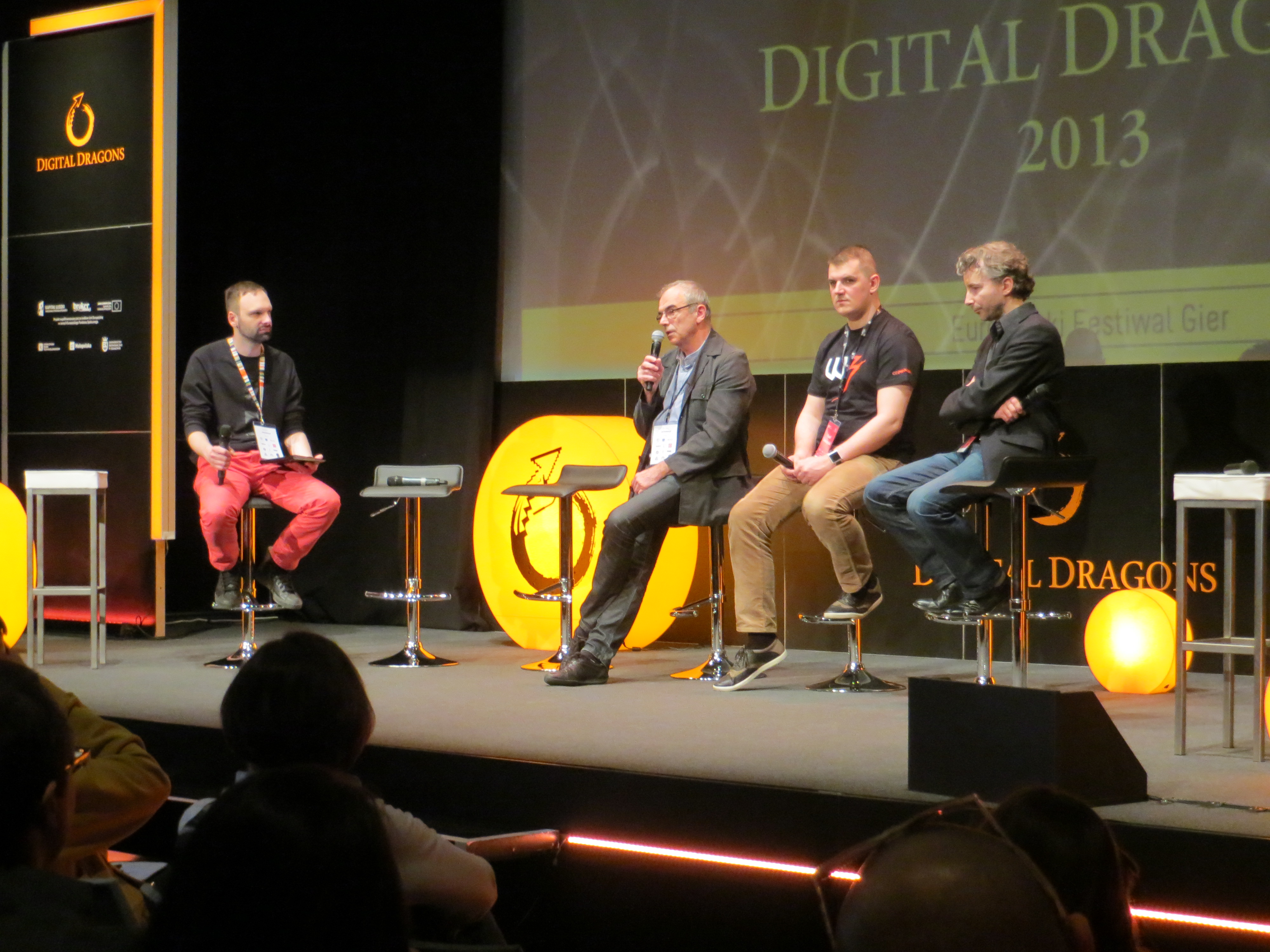
Some panels discussed topics specific for the country such as “the future of the game development industry in Poland”, where representatives from academia, development and business communities shared their points of view. There were also others that covered general topics such as “Tips and hints for young developers”, and “Current and future trends in F2Psector”. Workshops and sessions delivered the information on subjects such as: Graphics and Level Designs, Game Design, Business or Marketing.
Art of Gaming
First Day Keynotes Speaker, Guillaume de Fondaumiere
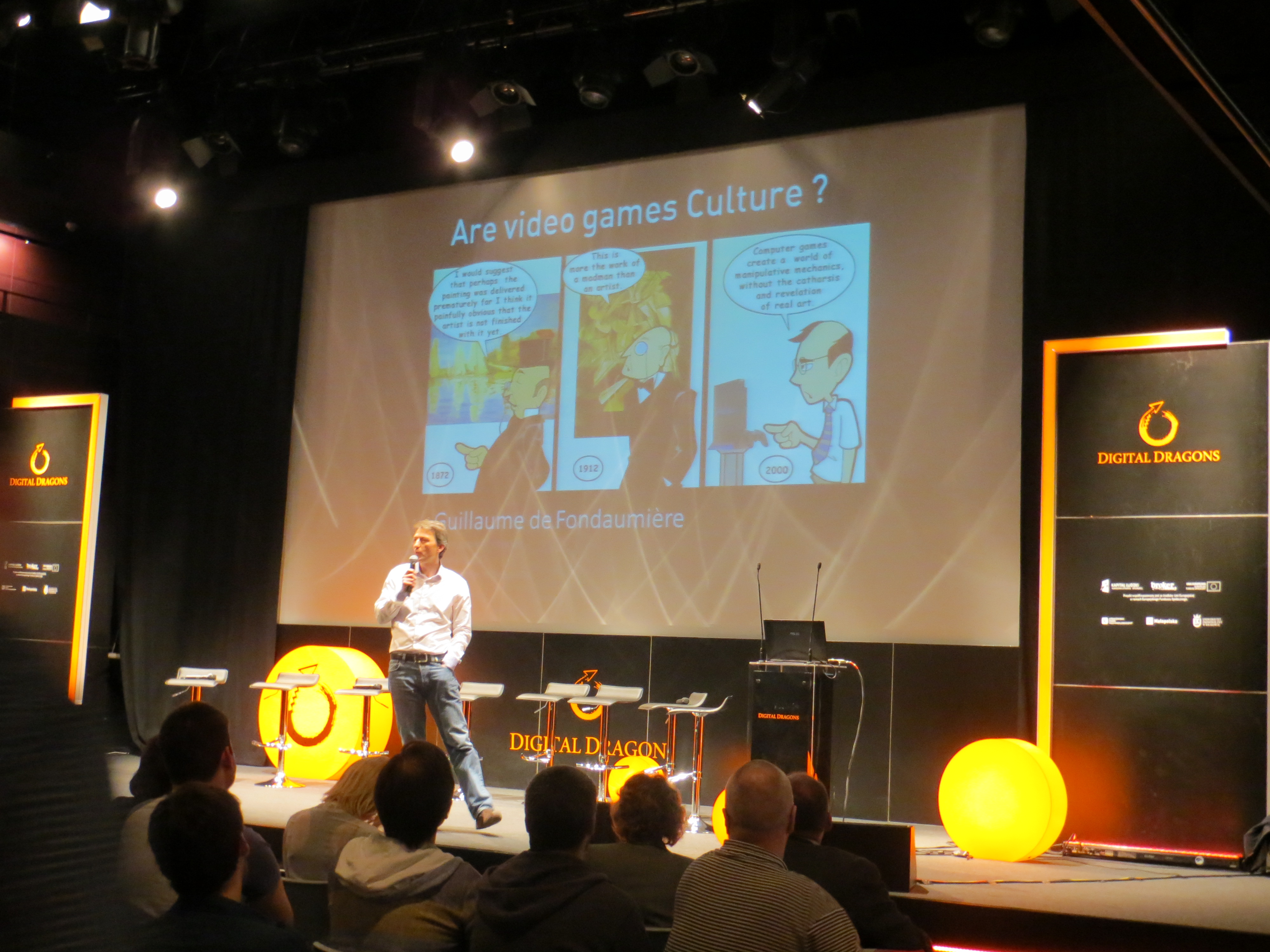
The first day keynote speaker was Guillaume de Fondaumiere , who is one of the most important game developer figures in the world today. He is the Co-CEO and executive producer of the Quantic Dream Studio based in Paris, which developed games such as, “Fahrenheit” (2005), “Heavy Rain” (2010), and the latest, in exclusive collaboration with Sony Computer Entertainment, “Beyond: Two Souls”, starring actors Ellen Page and Willem Dafoe, which is scheduled to premiere in the autumn of 2013. He was also appointed the Chairman of the European Games Developer Federation.
During his position in 2007, the French government and the European Union agreed to introduce a 20% tax credit for video games studios. Fondaumiere not only fought for many years to support the gaming industry, but also lobbied for the games industry to be recognized as an art form. “To me, all games are a form of cultural expression”, he says. “I see no reason why games should be treated differently than any type of literature or any type of movie. I think that more and more video games are becoming artful, and are becoming a form of art that should be recognized next to the others.” In his opinion, games should be on the same level among institutional forms of art such as, architecture, sculpture, visual arts, music, literature, theater, cinema art and media arts (television, radio and photography).
However, in reality they are completely different. Media and internet sends the message that games trigger violence and players get addicted to them. Today, stereotypically we associate games with either violent games or lighthearted entertainment for children. The reasons for such thinking originated from the early years of the gaming industry, which prmarily targeted children. The first games were very simplistic; they had boosted the simplest instinctive behavior and the release of adrenaline, which is also referred to as hormone 3F – fear, fight, flight.
But times have changed since then; the games, the hardware and even the players themselves. Today, the old game enthusiasts have all grown up, but still want to play games. However, they expect a richer, fuller, and more involving game experience. Under such demanding clients, more dynamic and multi-directional developments of games have been created, and the palettes of emotions have been greatly increased. Today’s game has a story, utilizes state-of-the-art visual graphics and utilizes new, advanced forms of interaction with the player. In addition there is also increased proliferation of artists in the games industry, who get to express themselves creatively and individually.
Digital Dragons Awards
Digital Dragons Award
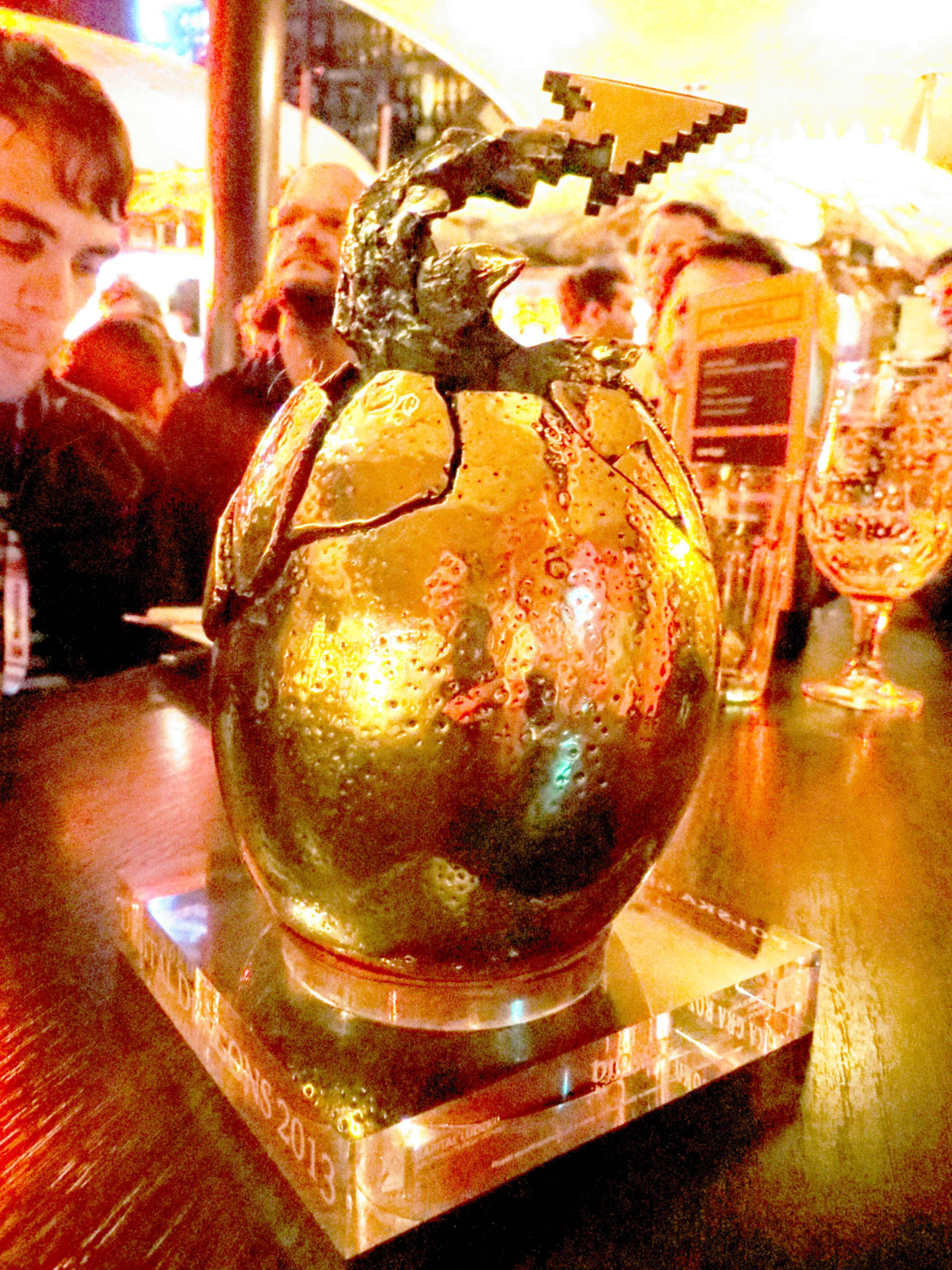
The Digital Dragons Awards are the premier prizes for peer-recognition in the digital game industry. The recipe for a winning game seems to be creativity, compiling storytelling and the power to trigger the audience’s emotions. The winners receive statuettes of a digital representation of the dragon of Krakow. Awards are given in four categories: European Game, Polish Game, Polish Mobile Game and Innovative Game.
Journalists discussing the Digital Dragons Award
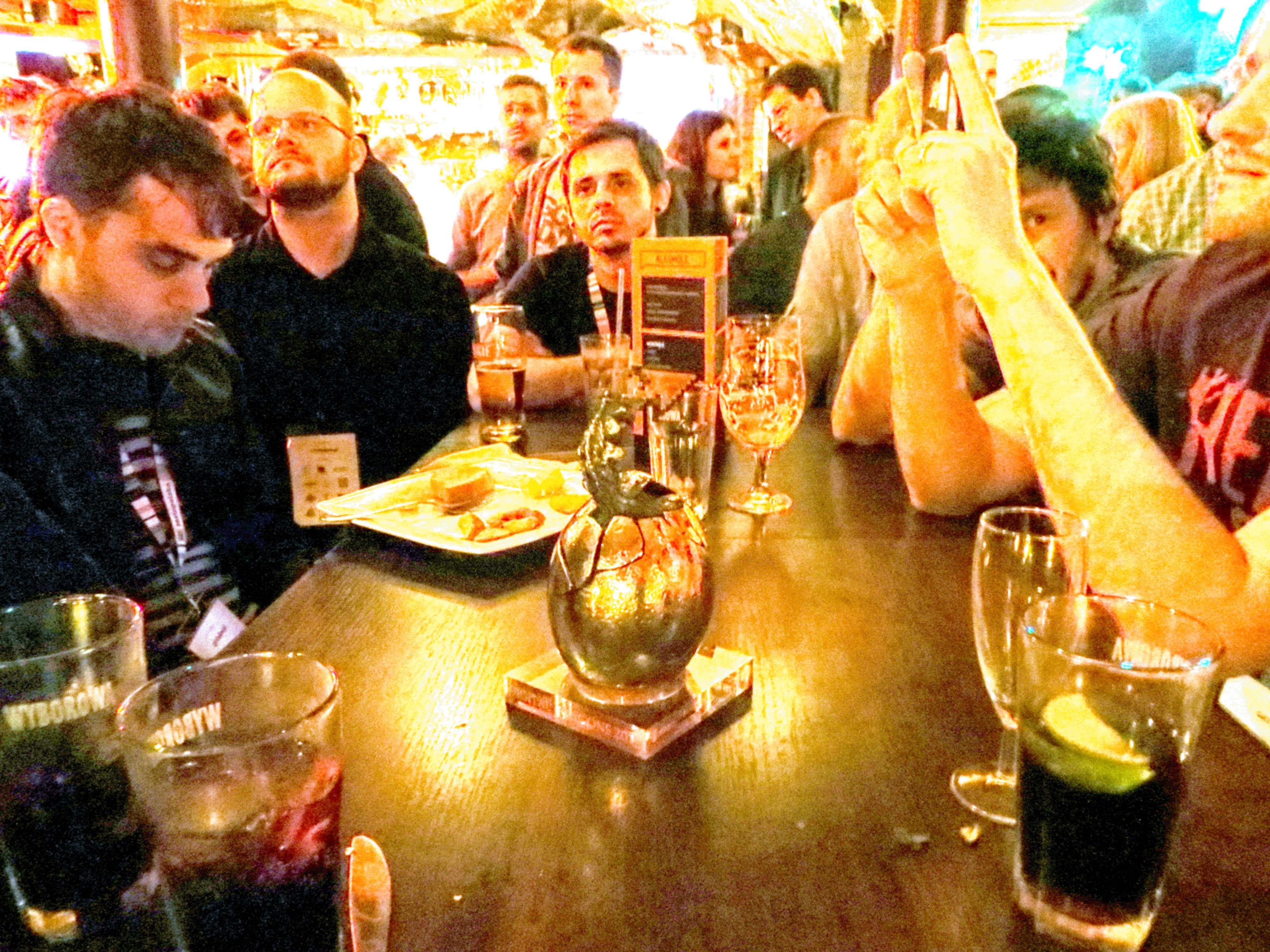
The nominees in the Polish Game of the Year category were: Real Boxing (Vivid Games), Datura (Plastic Studios/Sony Computer Entertainment), Puzzle Craft (Art Thanea Games/Chillingo), Anomaly Korea (11 bit studios) and Mad Riders (Techland/Ubisoft). The winner was Vivid Games.
The nominees in the Polish Mobil Game of the Year category were: Real Boxing (Vivid Games), Anomaly Korea (11 bit studios), Puzzle Craft (Ars Thanea Games/Chillingo), Shoot the Zombirds (Infinite Dreams), Mighty Wardens (Demonual Studios). The winner was: Puzzle Craft
The nominees in the European Game of the Year category were: Trine 2 Frozenbyte/Ubisoft), Deadlight (Tequila Works/Microsoft), Spec Ops: The Line (Yager Development/Cenega), Hitman: Rozgrzeszenie (IO Interactive/Cenega), Puzzle Craft (Ars Thanea Games/Chillingo). The winner was Spec Ops: The Line.
The nominees in the Innovative Game of the Year category were: FEZ (Polytron/Microsoft), The Walking Dead (Telltale Games), The Unfinished Swan (Giant Sparrow/Sony Computer Entertainment), Journey (thatgamecompany/Sony Computer Entertainment), Zombie U (Ubisoft). The winner was: The Walking Dead.
Additional images of the event can be seen at the M&E Tech Gallery for the Dragon Games 2013.
