


HP FlexNetworking Architecture – Interop 2011
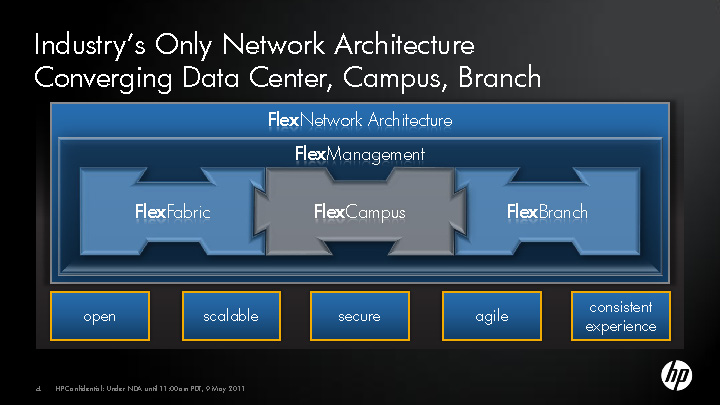
May 11, 2011 – Las Vegas, NV – At Interop in May, HP introduced their new Flex Network Architecture which is designed to give a single interface and UI for Data Centers, Campus and Branch computing requirements. The Data Centers (DC) feature a flex fabric of compute and storage nodes, the Campus environment is based on wires and wireless connections (managed by HP’s Intelligent Management Center tool), and the Branch environment features security, applications and connections to individual users. The Flex Fabric is based on the concept of a single network fabric that is wired-once, and configures as a virtualized network that supports virtualization-aware threat management, and dynamic, virtualization-integrated network provisioning.
HP IMC Sample Screen
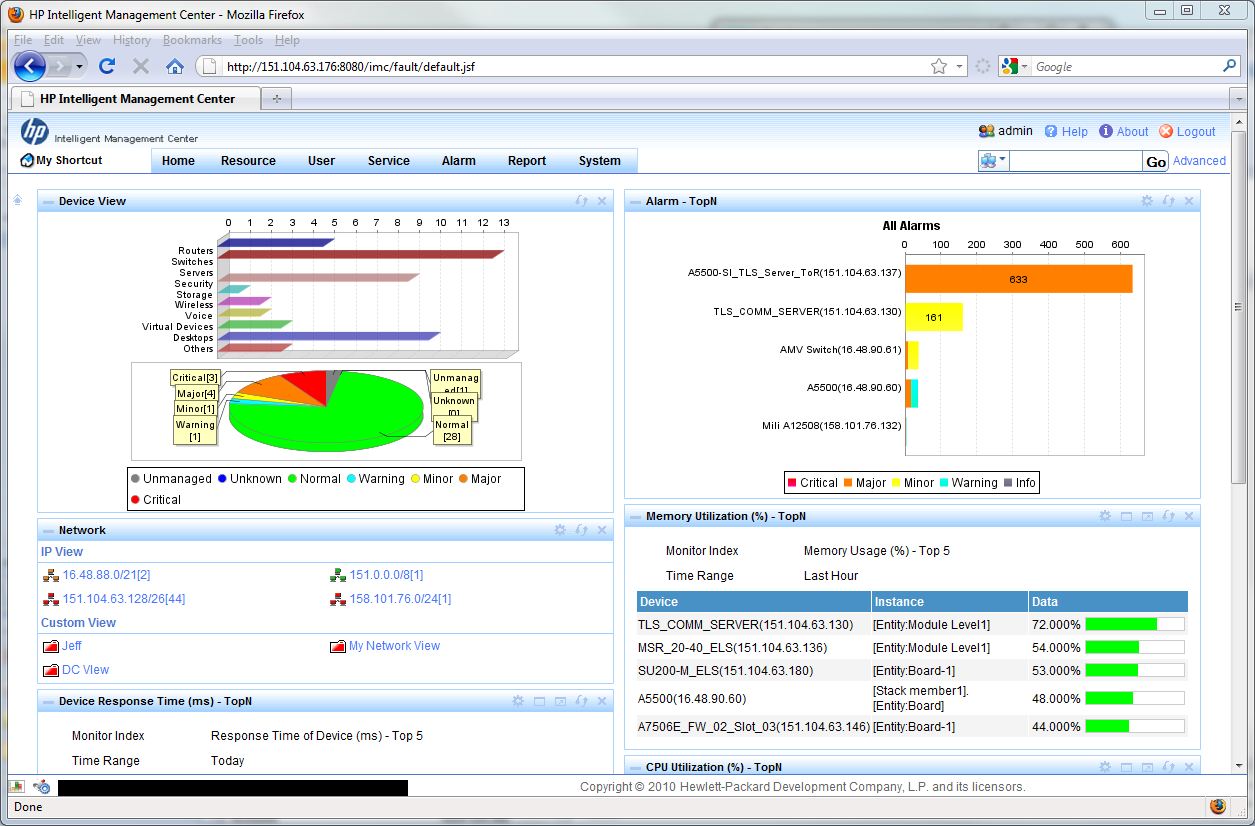
The new architecture is based on open standards for the API and is designed to support multi-vendor integration and interfaces. The IMC tool gives a “single pane of glass” interface to over 2600 devices from 35 manufacturers for managing both physical and VM connections. This method supports multi-dimensional scaling (capacity), security at the VM level and both physical and virtual branching through their new Tipping Point S6100N Flex Fabric device. This device can support up to 8Gbps of secure inspected throughput and is a non-IP device in the signal path, so threats cannot identify its presence in the system and create evasion responses.
HP S6100N IPS

The key points of optimization in the new DC structure are low latency (under 3 microseconds) and improved QOS and QOE on a systematic level. The campus level product (HP A10500 switch) features a maximum backplane bandwidth ranging from 5.75Tbps to 11.52Tbps, with swtiching capacity of 1.28Tbps to 2.56Tbps over 384 Gigabit ports and 128 10Gigabit ports. The product is currently available with 10GbE modules, with 40GbE modules available in Q2 ‘2011. 100GbE modules are planned for the product as future expansion. The Ultra high reliability and resiliency system features redundant/load sharing fabrics, fans and power supplies. The design is such that software is separated between the control plane and data plane as well as supporting patches and new service feature deployments without having to restart the virtual switch fabric.
HP IMC – Single Pane of Glass Concept
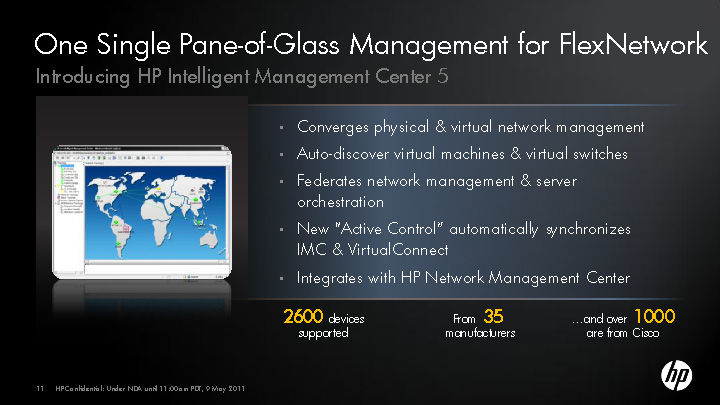
The system is designed to provided a consistent QOE for the end user, that can have that experience managed from a central point in the network. The resulting environment helps rescue the OPEX for the environment and results in a significant price/performance reduction compared to other solutions in the market. The ability to scale the system both vertically (multi-tier) and horizontally (expand any layer) without changing the administration tasks insures rapid reliable growth.
