


Retail AR at AWE 2015
June 2015 – At the Augmented World Expo they had a well attended session on Retail uses of AR. Besides the enterprise applications, retail has found several niche areas to start applying AR technology. For these applications, there are no AR glasses involved, instead, the display on a mobile device is enhanced with the AR content. The session focused on actual examples of deployments in the advertising and customer engagement areas. Key features were the AR solutions have integration with analytics and metrics markers so that campaigns can be tracked and their effectiveness measured.
Candybar AR Inside Location Services
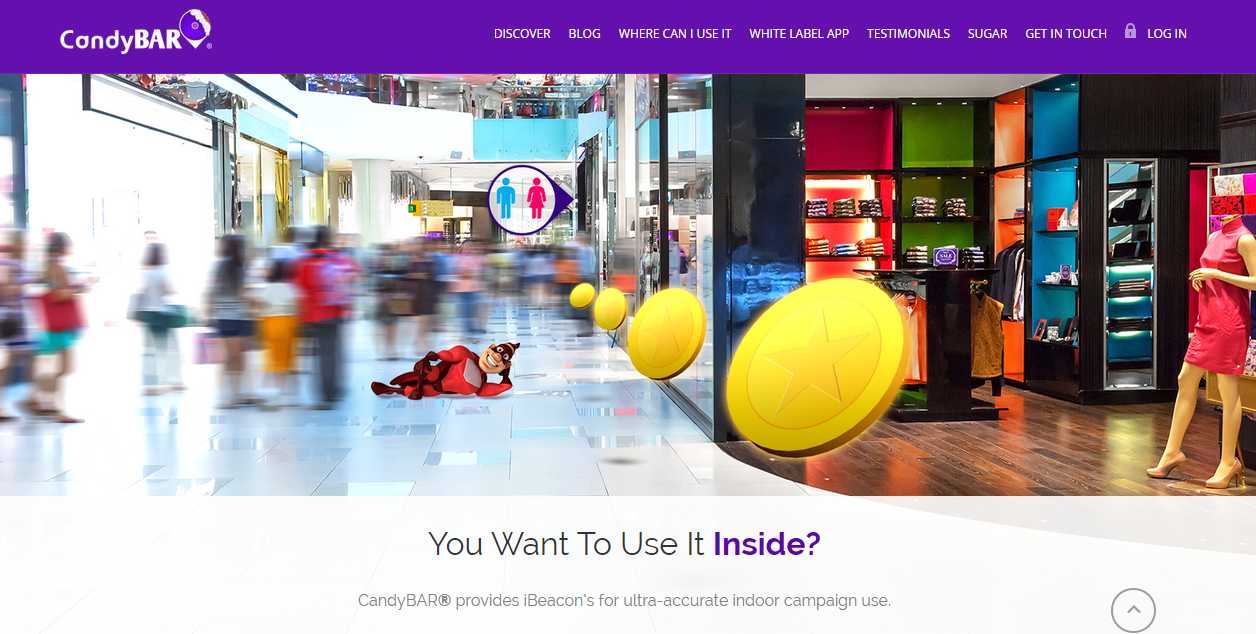
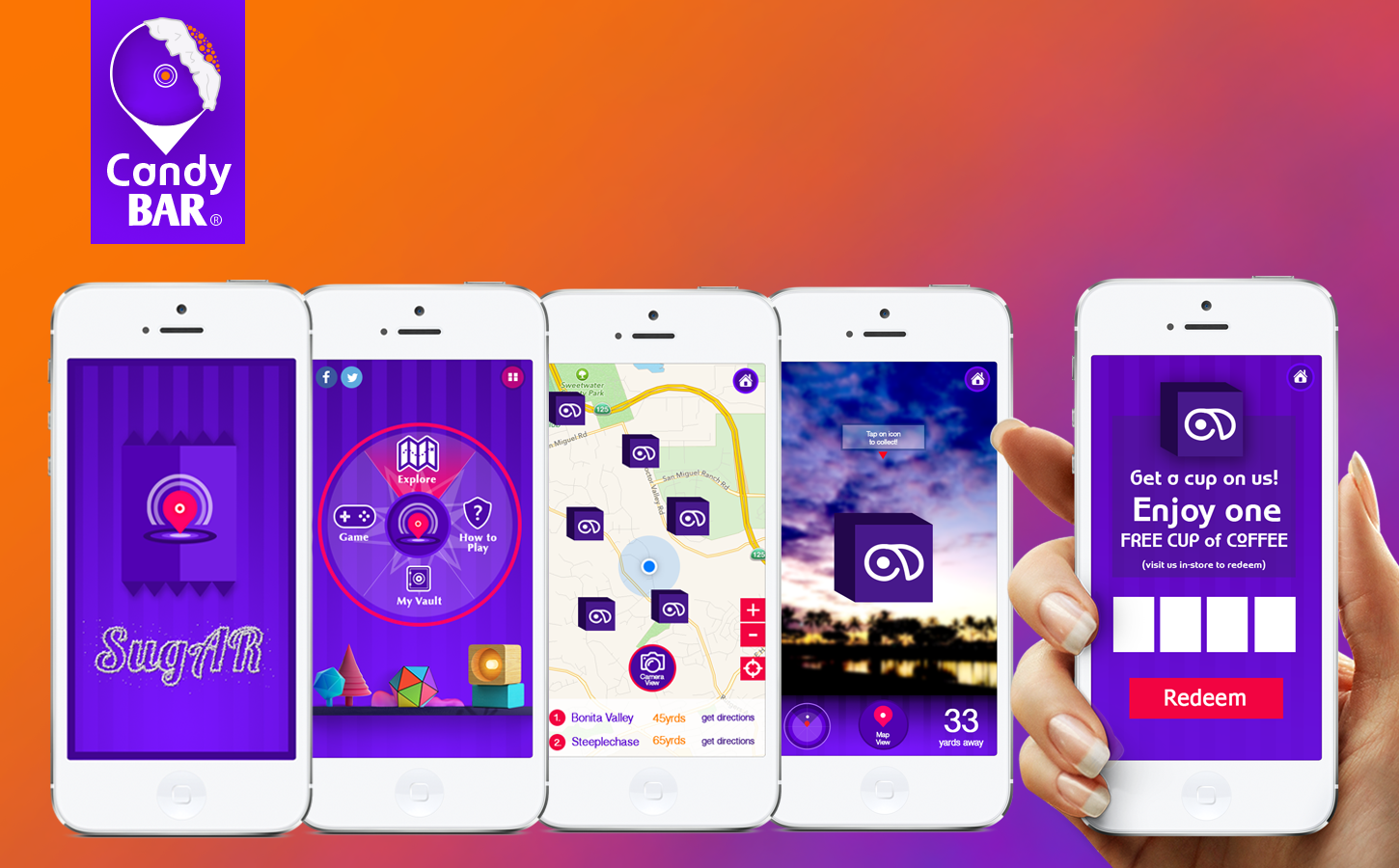
The first example that was shown was from CandyLabs They have a location service based technology that works both inside facilities and outside. The system produces mobile apps that have active AR gamification overlays on the mobile phone to show maps and direct people to products being promoted. The gamification and direction base is similar to localized ads that have geotagging, except the visualization is AR and the paths create loyalty points rewards. The key is to use the AR as part of the brand recognition and loyalty behavior, not just be entertainment. GPS is used for the external location services and beacons for the internal. This is a real time service that has streaming congtent for the AR objects that are being displayed. As a result, there is a QOE variable based on the data speed and connection quality. The better way to address the QOE issue is to create an offline model for the AR creation.
CandyBar SugAR mobile app screens
Another example cited was the Lowe’s Holoroom. Their Innovation Lab setup a pilot holographic room, which uses a simulator where customers can try placement and view of different products before they buy them. The pilot program is being done at two sites in the Toronto area, with hopes of further expansion. The name is kind of a misrepresentation as it is not quite a full holographic room. The reality is the system allows users to recreate the room they want to renovate on a screen and add in products they want that are in the Lowe’s inventory. The room is then displayed on a tablet, and shoppers can move about the room to “tour” the space they just built. The initial release of the product had the software limited to the bathroom. Further development of the software will allow the home improvement retailer to roll out new product categories and rooms.
These were the stated examples of AR in the consumer retail space. Companies like Coca-Cola are using AR in their loyalty programs to further engage customers with their product and their associated partner system. The installation of AR in the marketing space will be growing as it is a unique experience in the market and brings differentiation to the companies that use it.
