


EVS Highlights new Capabilities
April 15, 2012, NAB Conference. We met with EVS to hear what they are doing in broadcasting. Sports and other live content is growing at a high rate. The equipment for a typical sports event must now include some high-speed cameras for the ultra slow motion that consumers demand.
A soccer game might require as many as 40 cameras. The images they capture become a part of shared media that goes through many flows and delivery channels. The new generations of technology are changing the way we consume content.
EVS Extended Live Broadcast Architecture
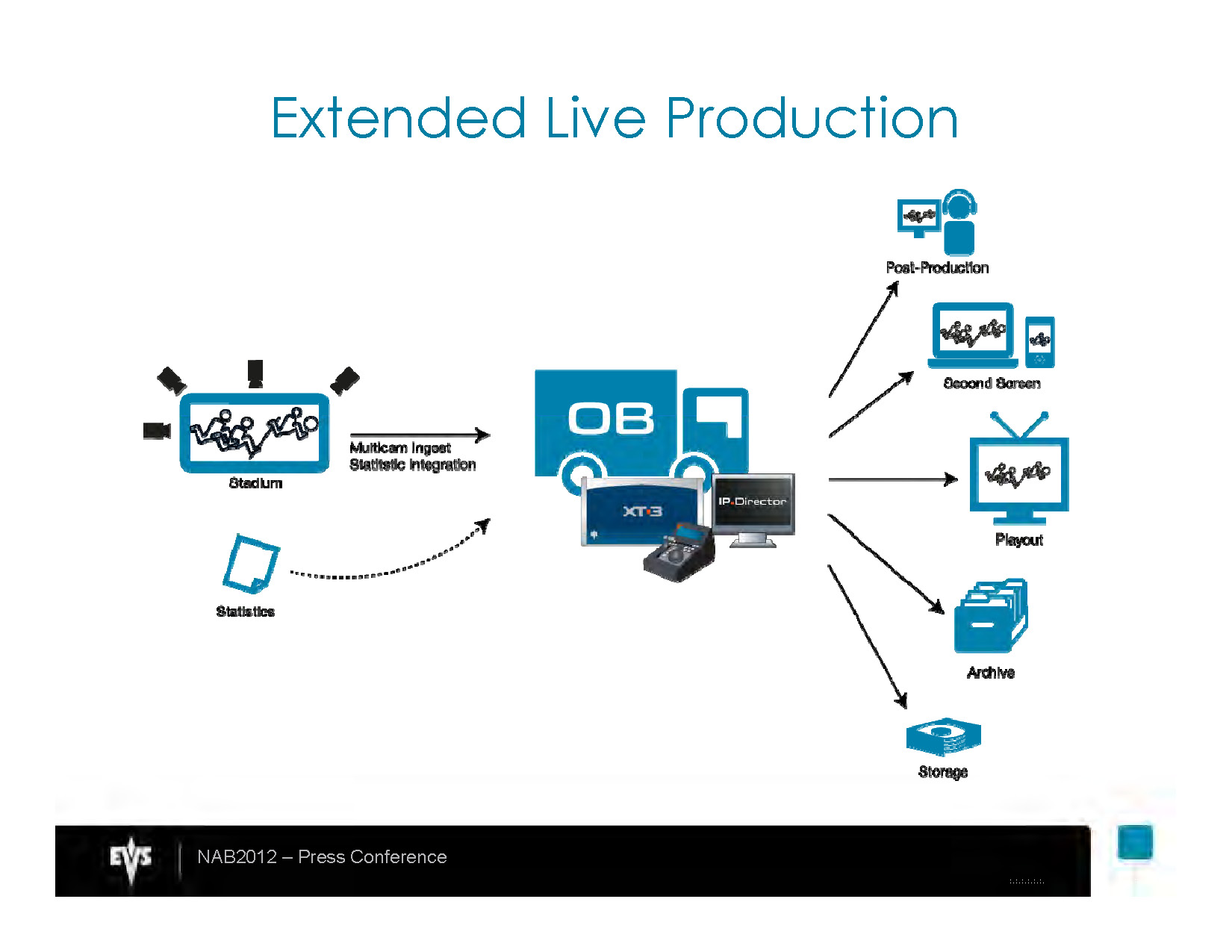
Therefore, broadcasters have to convert the content to value. This value will be in the form of live production, archive management, central sports center broadcasts, and connected screens.
The content goes through multiple flows to address the increased number of channels available for distribution. This set of channels requires more formats, storage capacity, and increased automaton to meet the demands. The various encoding formats enhance the viewing experience by connecting multiple screens. Broadcasters can monetize the second screens by linking live content with correlated content on the second screen.
At the sports center, the broadcasts need to ingest, playout, and manage the content flows. As stories unfold, material from archive and live footage might be merged on one platform and carried separately on others.
One example of the types of efforts for upgrades is Turner Sports Network. They needed a fast turn project to consolidate systems around Final Cut tools. The system needed improved reliability and fault tolerance, and had to be incrementally scalable. Upgrades and changes in the system had to meet various standards and be fairly future proof.
The system configuration was fragmented, with much of the hardware on a fiber channel fabric. Asset management and metadata were inconsistent. The system faces many issues of a multi-vendor environment, and training for any new equipment and flows was happenstance.
EVS developed a workflow and integrated the system components. Key issues they addressed were scheduling and interoperability in the ingest, playout, and status monitoring for system health. When they started the project, Turner had over 200 workflows covering thousands of files, and many required custom APIs.
They also developed training modules for ongoing changes in flows to keep the editors up-to-date. They added logging capabilities for better file system integration, and also created sports specific screens for various functions. Together, these changes have improved scheduling and resource management for Turner.
EVS continues to work with other companies to help them manage their cameras, servers, and have everything work under a single program framework. These changes to the workflows allow the companies greater access to unused footage, and the capability to fill in missing actions. At the same time companies can more easily manage the various rights associated with connected screens and apps.
As the multiple camera angles and views get selected by the viewer rather than the director, near line VOD and cloud distribution become the norm. Their new ingest API generates a second screen timeline which helps provide field action specific, and multizone camera views to the user.
