


Neutrality is a key to success for Belgium and Imec
Interview with Lode Lauwers, vice president of Imec (Interuniversity Microelectronics Centre)
Lode Lauwers, Vice President of Imec
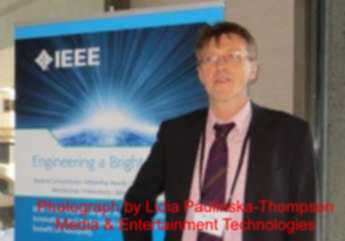
Imec’s history starts in 1984. The initial concept was to bring a few universities together in one location for further collaboration. “It was like scaling up of research” – recalled Lode Lauwers. He joined imec in 1985 as a Ph.D. student. Lauwers has an M.S. in Electronics Engineering and a Ph.D. in Applied Sciences. He started as a researcher. The company was built on the academic reputation and prominence of the Katholieke Universiteit Leuven in Belgium. From that beginning, Imec has gradually grown over the years. “You can almost say without ups and downs, but gradually. Today its staff is about 2000 people. 2/3 of these people are still local employees, butImec is now a multinational company”.
How did Imec switch from a local university mentality to become a multinational company?
“The first partnership with industry was probably in the ’80’s but it was a very small one. Then in the early ’90’s the idea of corporate partnerships became a fundamental concept for Imec” – he said. The government, which founded the company at the beginning, requested that they become a leading organization in setting standards for the industry. That required an international presence. “In 2000, we realized that this is a fundamental concept. Then we asked ourselves why not bundle the two concepts, corporate and international partnerships, together? Why not make up a complete package?”. Today Imec has a multi-partners programs.
There are many challenges in coordinating those programs. “In 2000, the Imec CEO and CFO literally toured the world to sign the contracts with partners. They signed 4-5 agreements and decided to develop systems to monitor those partnerships. That’s the moment when I came on board” – recalled Lauwers. In 1992, he left imec to work with the Belgian government on their contract. He became a scientific advisor at IWT, and in 2000 general manager at Easics NV. Today he is vice president, business development & strategic accounts at imec. Prior to that he served as director, strategic program partnerships for silicon process and device technology, managing imec’s core partner research program on sub-32nm CMOS technologies.
“Coordination became very important, so we set up offices close to our partners and visit them at least once a year”. The research center of imec still headquartered in Leuven in Belgium, with offices in Belgium, the Netherlands, Taiwan, USA, China, India and Japan. “We set up the review system in 2005 and have two big reviews a year. Partner companies send people to our location and we have around 400 people visiting us all the time, from all over the world. The system is constantly evolving”.
Do you think the commercial model set up by IMEC is where the industry is going? “Collaboration is absolutely necessary. The model of R& D was evolving because it became too expensive for one company, even if it is big company. There is value even for the leaders to have certain R&D outsourced in a central location that can dedicate more time to specific topics”.
As an intern from the University, Lauwers remembered, when imec started, some of the other universities saw it as their competition. “Now all research groups in those universities are bigger than ever. It is proof that was not a threat but possibility to grow”. He sees clear differences between imec and the universities. Their biggest possibilities are their focus on basic research. “Our mission is not redoing exploratory work, but work on those areas that have a potential to work with an existing platform, for example, memory, or logic. Universities have a much broader scope”. Today imec works with about 200-250 universities on various kind of collaboration. It is low profile collaboration such as exchange of professors or students, for conceptual work and collaboration on specific topics.
“Universities can create initial IP or prove the concept on the lab scale. They can prove, for example, that this material has potential in those conditions. This is a typical university result, but it is far from what we are doing. A professor can’t bring it further, because he does not have all the necessary equipment. They maybe have a little lab but never ever have a full platform to demonstrate something”.
It is seems strange to talk about academic institutions having a time limit, but when students graduate and their project is done. At the universities, each topic is usually connected to one student. Lauwers gave the example of working on 3D integration stacking. “The Imec program as a whole has more than 100 people working on 3D stacking and ranges from making the via technology, how to do polishing, how to make wafers, how to stack them, how to burn them in, how to do stress management, All of these areas are linked together.” 3-D is one of example of the type of work that demonstrates the ecosystem where many people collaborate on the project. That is the space for companies as Imec.
“On the other side, the individual company also does not realize the whole platform, because as a company they have one market. Imec, in such cases, can also set up the standards because we bring logic and memory companies and software companies.” reviewed Lauwers.
There are organizations on the market that do similar work but Imec seems to be the most successful. “Imec’s big value is neutrality. No big company and no government is dominating the whole story. It can be consider as a weakness too because there is not a big chunk of money coming from one place. That is true. Imec funding from government is less than 20%, the rest comes from private companies” commented Lauwers.
Neutrality seems to be also the key to success for Belgium, which is a geographically small country in Europe, but has big influence on this continent. It is a founding member of the European Union and hosts the EU’s headquarters.
“Not mention the quality of results what is obvious” added Lauwers, “but neutrality is a key. Intel and Samsung are on board and they are in the same program but they do not feel threatened by each other. Imec manages the partners on equal basis and does not favor one over the other”.
Lidia Paulinska-Thompson
