


Future of Health Discussion
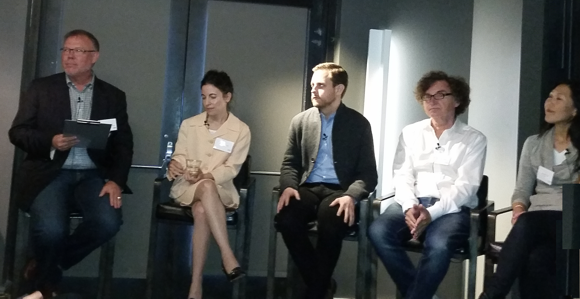
August 2015 – The Hatch Agency coordinated a panel event on the Future of Health featuring some leading companies in the next generation of personalized health services. The panel was moderated by Dr Alan Green of the Society of Participatory Medicine; the panel consisted of representatives from Ancestry Health, Glow, Scanadu, and Spruce. The premise for the event was that the smartphone is the core of everyday life and that it can be the both the conduit and repository for personal health information. The challenges facing the community, are what does the data mean and how should it be used?
Glow is entering the marketplace as a platform for social discussion and data focusing on women’s reproductive health. The company is a data science company that is trying to revitalize, through social connections and cloud information, research studies and capture information that was last collected over 50 yrs ago. The site is using the smartphone as the catalyst for the social discussion for the community and between women who can participate both with words and through the data. The focus is a series of apps that track fertility, pregnancy, and health & sex concerns trends and cycles. This data, which typically is not quantified and tracked, can now produce trend and prediction information on health issues.
Ancestry Health is also using the cloud as a collective data store. They are supplementing their genealogy data with Geonotype DNA testing. The collective data set in the cloud is allowing data science to address the issue of who are we on a genetic basis. This information can be accessed from the mobile devices and predictive actions can be implemented based on the statistical models and individual health history. The Geonomic data was collected on approximately 1M people last year and growing.
Scanadu is bringing medical diagnostic equipment out of the medical clinics and hospitals to the smart phone and the home environment. Starting with simple information such as temperature, blood pressure and heart rate, the devices will collect information through your smart phone. The data is then sent to the cloud and it allows for both personalized analysis on trends from your data, but also against aggregated and anonymized data so you can compare against the collective group of the same demographic. This allows the individual to track and monitor their overall health condition on their own without the overhead of the medical institutions.
Finally, Spruce is a telemedicine company that is focusing on dermatology as first practice. The next generation of the connected product will support photos and lab work rather than just consultation. The service is based on quality of service not just convenience. Like the other products, the data is being collected in the cloud for future analysis and data science. The goal is to have their telemedicine be the first point of contact and then determine if off-line physical visits are required.
The challenges that were discussed for this new expansion of the cloud health is security and privacy of the data. The issues of personal, professional and intermediate service and support access to the data have yet to be ironed out and determined. This also relates to travel and remote access rules and regulations. Business models for the use of this data, and vetting of the data is also a concern. When collected by medical professionals there is a targeted assumption of quality and methodology of collection, and this has not been standardized in the consumer centric models. Further, the presentation of the data in media form, multi-media form and distributed delivery has many quality of experience (QOE) issues to be able to be used for unified diagnostic analysis.
